Wording guide
Gujarati wedding invitation wording: the kankotri, line by line
By the Wishly team · Updated
A Gujarati wedding invitation, the kankotri, opens with Shri Ganeshay Namah, names the hosts with A. Sau. before a married woman's name and -ben or -bhai after a first name, and lists every function from the mandap muhurat and pithi to the hast melap. It is sent by the head of the family and asks guests to come saparivar, with their families.
This guide sets out the order of a kankotri, gives samples in English with the Gujarati lines families keep, and covers the etiquette of the first kankotri and the mameru.
The order of lines on a kankotri
A Gujarati wedding spreads over several days, so the kankotri is as much a programme as an invitation. Families name each ritual by its Gujarati word, and relatives use the list to decide which days to come.
- Shri Ganeshay Namah and the kuldevi's name at the top.
- Bhavbharyu Amantran, a heartfelt invitation, as the heading.
- The hosts, with the grandparents and their blessings above them.
- The bride and groom, each written with Chi., and their parents.
- The programme: Ganesh sthapana, mandap muhurat, grah shanti, pithi, mameru, the garba or sangeet night, the jaan, the hast melap and the reception.
- A closing request, and the names of relatives who look forward to your coming.
Formal kankotri wording from the parents
Many Gujarati families in cities now print the kankotri in English, keeping the Gujarati headings and honorifics. This sample does that, from the bride's parents.
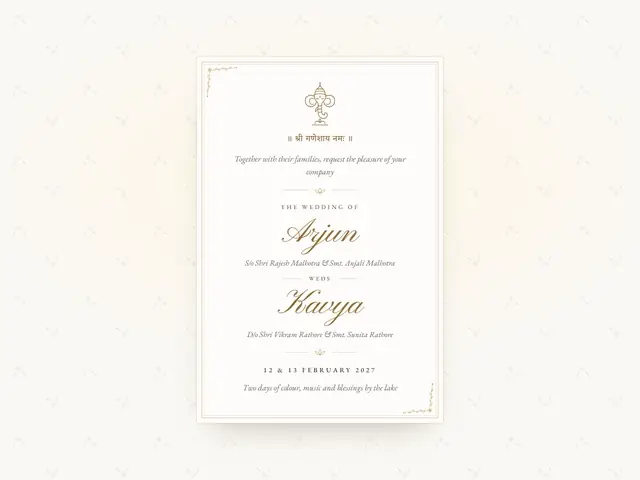
Shri Ganeshay Namah
Bhavbharyu Amantran
With the blessings of our kuldevi and of Shri Mahendrabhai and A. Sau. Kokilaben Shah,
A. Sau. Nayanaben and Shri Kiritbhai Shah
invite you to the wedding of their daughter
Chi. Riya
with
Chi. Kunal
son of A. Sau. Hetalben and Shri Jayeshbhai Mehta
Hast melap: Saturday, 6 February 2027, 7.15 pm
[party plot], Ahmedabad
Aa shubh prasange aap saparivar padhari navdampati ne ashirvad aapsho.
What it says: Shri Ganeshay Namah is a salutation to Lord Ganesha, and Bhavbharyu Amantran means a heartfelt invitation. The last line means: on this auspicious occasion, please come with your family and bless the newlyweds.
How the functions run
The Ganesh sthapana opens the wedding at home, followed by the mandap muhurat and the grah shanti, the pithi, the mehendi and the garba or sangeet night. On the wedding day the groom's jaan arrives, the bride's mother welcomes him with the ponkhanu, and the hast melap, the mangal pheras and the kanyadaan follow before the vidaai. Print the times for each function guests attend, so that relatives arriving from Mumbai or abroad can choose their days.
Couple-hosted and modern kankotri wording
Younger couples often send a lighter invitation in their own names, and the garba night is the part their friends ask about first.
With the blessings of both our families,
Riya and Kunal
invite you to celebrate with us in Ahmedabad
Garba night: Friday, 5 February 2027, 8 pm
Wedding: Saturday, 6 February, hast melap at 7.15 pm
Bring your dandiya on Friday.
WhatsApp, the mameru and the garba night
Functions with their own guest lists, such as the mameru, the pithi and the garba, are easier to manage with a short message each. Send them a few days ahead, with the address and the dress code.
Jai Shri Krishna! Riya and Kunal's wedding is on Saturday, 6 February 2027, in Ahmedabad.
Every function, the map and the RSVP are in the kankotri: [link]
Jarur padharjo!
What it says: Jai Shri Krishna is a common Gujarati greeting; the last line means: do come!
Mameru
Friday, 5 February 2027, 11 am
At the Shah home, [address], Ahmedabad
Riya's mama and mami bring the mameru; stay for lunch after the ceremony.
What it says: Mama and mami are the bride's maternal uncle and his wife.
Garba Night
Riya weds Kunal
Friday, 5 February 2027, from 8 pm
[party plot], Ahmedabad
Dress code: chaniya choli and kediyu
What it says: Chaniya choli and kediyu are the traditional garba outfits for women and for men.
Etiquette for a Gujarati invitation
The first kankotri is written for Ganesha and placed before him, and some families also send one to the kuldevi's temple, before any guest is invited. Elders receive theirs by hand, and the visit is part of the invitation.
The groom's family prints its own kankotri for its own guests, with the jaan, the groom's procession to the bride's venue, as its main event. The mameru, when the bride's maternal uncle's family brings her the panetar sari and gifts, is a family occasion, so its message goes to a smaller list.
- Say which functions each guest is invited to; not everyone comes to the pithi or the mameru.
- If the food is Jain, or without onion and garlic, say so; relatives who keep those rules look for it.
- Give the garba night a dress code; guests plan chaniya cholis and kediyus around it.
Questions families ask
- What is a kankotri?
- It is the Gujarati word for a wedding invitation card, from kanku, the kumkum once used to mark it. The first kankotri is offered to Ganesha before any other is given.
- What does A. Sau. mean?
- It stands for akhand saubhagyavati, a blessing for a married woman, used before her name. The bride and groom are written with Chi., and -ben or -bhai follows first names as a mark of respect.
- What is the mandap muhurat?
- The ritual of setting up the wedding canopy at an auspicious time, usually a day or two before the wedding. Close family attend, so it appears on the kankotri.